


2025 Ultimate Guide to Modal Fabric: Sustainability, Sewing Tips & Care
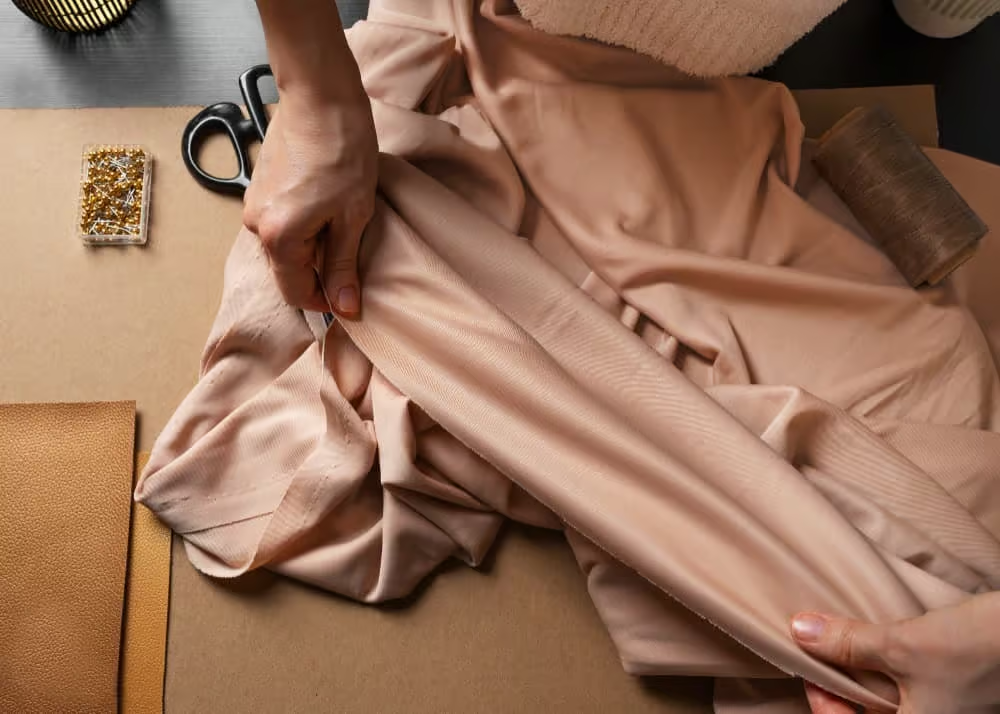
Imagine a fabric that feels like a cross between your favorite worn-in cotton tee and a silk scarf. It’s cool to the touch, refuses to pill, and flows over your body like water. That is the Modal fabric. Did you know? Many high-end athletic wear and premium undergarments are made using this fabric. The addition of modal fabric makes them smooth and form-fitting, without requiring the delicate care needed for silk. But for us home sewists, Modal can be a little intimidating. Is it natural? Is it synthetic? What exactly is modal fabric? How should we master the techniques of sewing?
Here is the truth: Modal can be slippery, but with the right tricks, it is a dream to wear. In this guide, we will not only provide a straightforward definition of Modal fabric but also interpret its characteristics based on our studio's years of fabric testing and sewing experience, helping you master the best sewing techniques.
What is Modal Fabric?
Technically, it is a type of rayon fabric. But don't let that scare you off. While old-school rayon (viscose) can be flimsy, Modal is the stronger, more sophisticated sister. It is a semi-synthetic fabric made specifically from the pulp of beech trees. The beech fibers are spun in a way that makes them incredibly strong, even when wet. This is why your Modal underwear doesn't lose its shape after a spin cycle, whereas cheap rayon might come out looking like a stretched-out bag.
Modal vs Cotton
This is the most common debate we see in fabric buying: Modal fabric vs cotton. If you need to choose between the two, the best approach is to decide based on intended use. Cotton is a natural fiber renowned for its exceptional breathability and versatility—a fact well-known to everyone. Thanks to its airiness and soft feel against the skin, cotton is ideal for everyday clothing and bedding. We all love cotton. It’s natural, it’s reliable. But sometimes, cotton just...sticks. It can be stiff. It fades.
Compared to cotton, modal fabric is typically softer and smoother against the skin, with a silk-like drape that holds up well over time. It is also more absorbent and less prone to shrinking or fading after repeated washing. When you compare modal fabric vs cotton, the biggest difference is the drape and the touch. Cotton stands away from the body; Modal falls against it. To help you better understand the differences between them, here is a breakdown of how they compare in our studio tests:
| Feature | Modal Fabric | Cotton Fabric |
| Source | Beech Trees | Cotton Plant (Natural) |
| Texture | Silky, smooth, cool | Crisp, dry, soft |
| Absorbency | 50% more absorbent than cotton | High |
| Pilling | Resists pilling | Can pill over time |
| Warmth | Cool to the touch | Neutral |
Modal vs Viscose (Rayon)
Think of Viscose (standard Rayon) as the "Generation 1" version of this fabric family, and Modal as the upgraded "Generation 2." They differ significantly in performance and durability. Viscose is the most common and traditional form of rayon, valued for its affordability and soft hand feel. However, its durability and stability are both relatively poor. After washing, Viscore is prone to shrinkage, wrinkling, and even tearing. Modal is "High Wet Modulus" (HWM), which is fancy talk for: It doesn't get weak and mushy in the washing machine. Let's take a glance at the overview of Modal vs Viscose:
| Feature | Modal Fabric | Viscose (Standard Rayon) Fabric |
| Source | High (Safe to machine wash) | Low (Tears easily when wet) |
| Eco-Rating | Low/Medium | High (Notorious for shrinking) |
| Handfeel | Creamy & Soft | Silky but sometimes "plasticky" |
| Breathability | $$$ | $$ (Budget friendly) |
| Best For | Silky but sometimes "plasticky." | Silky but sometimes "plasticky." |
Modal vs. Lyocell (Tencel™)
They are produced using different processes and offer distinct performance characteristics. Both of these are premium fibers, and both are often made by Lenzing. But they feel different on the skin. In terms of feel, modal is generally softer and more flexible, with a more fluid drape that makes it especially popular for loungewear, T-shirts, and intimate apparel. Lyocell, by contrast, has a slightly firmer hand and a more structured drape, which can make it better suited for tailored garments or woven fabrics.
| Feature | Modal Fabric | Lyocell (e.g.Tencel) Fabric |
| Source | Beech Trees | Eucalyptus Trees |
| Eco-Rating | Good (If closed-loop) | Best (Non-toxic solvents) |
| Handfeel | Slinky, heavy, creamy | Smooth, dry |
| Breathability | Excellent | Excellent |
| Best For | Loungewear, Jersey dresses | Button-up shirts, Denim alternatives |
The Ultimate Cheat Sheet(Modal vs Cotton, Viscose, and Lyocell)
| Feature | Modal | Cotton | Viscose | Lyocell |
| Feel on Skin | Very soft, smooth | Soft, depends on quality | Soft at first | Smooth, slightly firmer |
| Eco-Rating | Better | Yes (if organic) | No (Chemical heavy) | Best |
| Shrinkage After Washing | Low | Medium | High | Very low |
| Keeps Shape Over Time | Good | Fair | Poor | Excellent |
| Wrinkle Resistance | Good | Poor–fair | Poor | Good |
| Durability | ⭐⭐⭐⭐ | ⭐⭐⭐⭐⭐ | ⭐⭐ | ⭐⭐⭐⭐⭐ |
| Pilling Risk | Low | Medium | Medium–high | Very low |
| Ease of Care | Easy | Easy | Needs gentle care | Easy |
| Price Point | Medium | Low–medium | Low | Medium–high |
| The Verdict | The Comfort Choice. Best for softness and drape. | The Reliable Choice. Best for structure and beginners. | The Budget Choice. Good flow, but handle with care. | The Green Choice. Best for eco-conscious luxury. |
Why We Are Obsessed With It
Modal fabric is plant-based and exceptionally breathable, allowing garments made from it to dissipate heat and wick away sweat quickly in hot weather. Moreover, it securely locks in dyes, ensuring even the deepest blacks remain colorfast through repeated washing. Most importantly, Modal fabric is highly resistant to abrasion. You know those annoying little fuzzballs you get on polyester knits? Modal is much more resistant to that friction.
Summary: What is modal fabric? It is a semi-synthetic textile made from spun beech tree pulp, and is prized for being 50% more absorbent than cotton, resistant to shrinking, and incredibly soft. It is an "HWM" (High Wet Modulus) rayon, meaning it stays strong and holds its shape even when wet. Who wins the modal fabric vs cotton battle? If you prefer structured silhouettes—like T-shirts that maintain a relaxed fit or pajamas with a crisp feel—opt for cotton. For lightweight, breathable comfort, choose modal fabric. Examples include wrap dresses, flirty camisoles, or undergarments that feel like you're wearing nothing at all.
Sewing with Modal Fabric: Real Talk & Tips
Modal is extremely soft and fluid. Sewing with modal fabric can be both rewarding and a little challenging, especially if you are used to working with cotton or other stable woven fabrics. If it’s your first time sewing modal fabric, you'll likely struggle a bit when sewing for the first time because it's too slippery. During sewing, it tends to shift, stretch, and curl, causing your sewing machine to constantly skip stitches. But you don't have to suffer like that. Here are the real Tips for sewing Modal fabric:
- Choose the Right Needle: The Needle Matters a Lot. Ditch the Universal needle. Seriously. Modal is a knit structure. A sharp Universal needle will cut right through the yarn, causing little holes that grow later. Use this: A Jersey or Ballpoint Needle (Size 70/10). The rounded tip slips between the fibers to avoid snagging
- The "Lightning Bolt" Stitch: Watch the Stretch. Since most Modal contains a bit of Spandex (Lycra), you need a stitch that moves. Use a Lightning Bolt stitch or a narrow Zig-Zag (0.5mm width, 2.5mm length). If you use a straight stitch, your seams will pop the first time you pull the shirt over your head.
- Handling the "Slither": For hems, you may choose to sew using a twin needle, which prevents the modal fabric from being overstretched. Alternatively, place a sheet of thin paper underneath the fabric and sew through both layers together. After sewing, simply remove the paper.
- Don't force it: The key is to not tug or pull on the fabric while you're stitching. Just let the feed dogs do the work and guide it through. If you're struggling to keep things even, popping on a walking foot or dialing back the presser foot pressure usually does the trick.
- Reinforce the shoulders: Since Modal has such a lovely, heavy drape, the weight can actually cause the shoulders to sag after a while. Always use clear elastic or fusible interfacing tape at the shoulder seams to keep them in place and structured.
Is Modal Actually Sustainable in 2025?
Sustainability is one of the most common topics we discuss. Generally speaking, Modal is a great eco-friendly choice since it’s plant-based and biodegradable—but sourcing is everything. Modal is plant-based and biodegradable. The best Modal fabric comes from FSC-certified beech wood, which guarantees the forests are managed responsibly. The catch is the production process: turning wood into fiber requires chemicals. This is why we look for reputable names like Lenzing. They use a 'closed-loop' system that recycles 99% of the water and solvents, whereas generic manufacturers might still operate factories that flush those chemicals out into the environment.
Care Guide: How to Wash Modal to Prevent Shrinkage
You spent hours sewing it; let’s make sure it lasts. Remember the "Battle of the Rayons" we just talked about? Here is the good news: Modal is the low-maintenance sibling. Here is exactly how we wash our Modal garments to keep them pill-free and silky for years. Just follow these three golden rules:
✅ Protect it: When washing Modal fabric, remember to use a laundry bag (mesh bag). Modal gets heavy and soft when wet. A mesh bag protects it from getting stretched out by your jeans or snagged by zippers.
✅Keep it cool: Heat is the enemy of beech fibers. Stick to a gentle cycle with cold water (30°C/86°F or lower) and a mild detergent to protect that color and softness.
✅Do Lay Flat: Because wet Modal is heavy, gravity will pull on it. If you hang it dry, your dress might end up three inches longer than you intended. Lay it flat to dry instead.
Finally, regarding wrinkles: Modal resists them well, but if you must press a hem, keep the iron on low. Honestly, a steamer is usually the better, safer choice for relaxing the fibers.
Choosing the Right Projects for Modal Fabric
Modal fabric is a dream fabric, but it’s not a magic wand. It is best suited for projects that benefit from softness, breathability, and fluid drape. Because modal fibers are smooth and flexible, they create garments that feel comfortable against the skin and move naturally with the body. Start your sewing journey today with premium, eco-friendly Modal fabric.
Ideal Projects for Modal fabric
It is the industry standard for intimates, loungewear, and T-shirts. Its fluid drape also makes modal a strong option for sleepwear, dresses, and skirts. For home textiles, modal is often used in bedding, pillowcases, and lightweight blankets.
Projects That Require Caution
Don't try to force Modal into being structural. Tailored jackets, crisp shirts, or anything requiring sharp pleats will just look floppy. Modal is not structural. Items such as tailored jackets, crisp shirts, or garments that rely on sharp pleats may lose definition over time due to modal’s natural drape and flexibility. Wide-leg, elastic-waist palazzo pants? Yes. Tailored trousers? No. Heavy Modal can drag itself down. If you are making a tight dress, use a heavier weight fabric (250gsm+) or line it; otherwise, it might cling in ways you don't want.
Blends and Reinforcement
Sometimes you want the softness of Modal but need a bit more performance. This is where blending and stabilizing come in.
- Look for Spandex (Lycra) Blends: Pure modal fabric may become loose and lose its shape after several hours of wear. Always buy Modal Spandex Jersey (usually 95% Modal / 5% Spandex). The Spandex acts as a "memory" agent, snapping the fabric back into shape so your elbows and knees don't sag.
- Stabilize Your Seams: When you use it to make a dress, sew a strip of Clear Elastic or fusible tape into the shoulder seams and the neckline. This acts as an internal skeleton, supporting the weight so your dress doesn't distort over time.
Buying Guide: How to Spot High-Quality Modal Fabric Online
Shopping for fabric online can be scary. When selecting modal fabric for your next project, it’s important to choose high-quality fabric that will maintain its softness, drape, and durability after washing. Look for trusted suppliers and specialty fabric stores, as they often carry pre-washed or quality-tested modal fabrics. To make sure you are getting the good stuff, here is your 3-point checklist before you hit "Add to Cart."
- Check the Weight (GSM): Anything under 120gsm unless you are making lining. It will be too sheer and clingy. For T-shirts and tops, choose fabrics between 160gsm and 200gsm. For dresses that don't show your bra lines, you generally want to look for a medium-weight modal (around 200gsm to 250gsm). This weight provides that luxurious drape without being too sheer.
- The "Spandex" Ratio: Pure 100% Modal is beautiful, but as we mentioned, it can bag out. For garments that need to keep their shape (like leggings, tees, or fitted dresses), check the composition label. If you are making leggings or a fitted tee, check the label for a modal spandex blend. That small addition of Lycra ensures your elbows and knees won't bag out after a few hours of wear.
- The Certification: If you care about sustainability, cheap generic Modal is risky. High-quality suppliers will mention if their Modal is sourced from sustainably managed beech forests or uses closed-loop production. We prioritize stocking sustainable Modal fabrics that are verified to minimize environmental impact, so you can feel as good about the production process as you do about the finished garment.
Frequently Asked Questions About Modal Fabric
Is Modal fabric good for hot weather?
Yes, absolutely. Because Modal is about 50% more absorbent than cotton, it pulls moisture away from your skin incredibly fast. It feels cool to the touch, which makes it my go-to for summer dresses and gym gear.
Does Modal shrink in the dryer?
Be careful. While it is more stable than standard rayon, it can still shrink up to 5-10% if exposed to high heat. We always recommend air drying or using a "Low Heat" setting to keep your garment true to size.
Is Modal natural or synthetic?
It is officially classified as semi-synthetic. Since it starts as beech wood pulp but undergoes chemical processing to become a fiber, you get the best of both worlds—the breathability of a natural fiber mixed with the durability of a synthetic.
How should I care for modal garments to keep them looking new?
The golden rule is to wash it inside out—this prevents the surface from getting fuzzy. Low-heat ironing or steaming is recommended. For step-by-step guidance, please refer to the care guidelines in the preceding section.
Conclusion: Ready to Try Modal Fabric?
If you’ve been dodging Modal because you were worried it would be a slippery nightmare to sew, hopefully, this guide puts those fears to rest. It really is the sweet spot between luxury and durability—perfect for those everyday staples like tees, sleepwear, and undies. Whether you buy from us or elsewhere, always check the weight. At Global Fabric Wholesale, we personally test-sew our fabrics to ensure they aren't sheer. We focus on medium-weight options (180gsm+) and strictly cut continuous yardage, so you never have to worry about piecing together a maxi dress from scraps.
Grab a ballpoint needle and start with something simple like a tank top. You'll wonder why you waited so long.




 Login with Google